

Introduction to powder coating

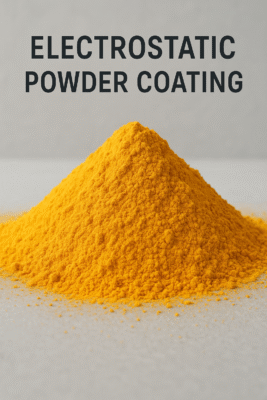
Powder coating It is an advanced painting technology that uses coarse paint powder to create a durable and uniform coating on material surfaces. Unlike traditional painting methods, such as liquid painting, powder coating does not require solvents for dilution. Instead, the paint powder is charged and adheres to the material surface, thanks to the difference in electrical charge between the powder and the surface. This creates a strong bonding coating that is scratch-resistant, heat-resistant, and resistant to environmental impacts.
Powder coating processes typically include key steps such as surface preparation, charging the paint powder, and heating to create the coating. Surface preparation plays a crucial role in ensuring the adhesion of the paint layer. The surface must be clean, dry, and free of impurities. After the paint powder is sprayed onto the prepared surface, the products are placed in a heated oven to fix the paint layer.
Powder coating It offers many significant advantages over traditional painting methods. First, this process saves time and costs, as controlling the painting process and minimizing waste is highly effective. Secondly, powder coating comes in a wide range of colors and has a high finish, enhancing the aesthetic appeal of the product. Furthermore, powder coating does not contain harmful solvents, contributing to environmental protection. The applications of powder coating are diverse, ranging from industrial products such as vehicle frames and furniture to electronic devices and household appliances. The development of powder coating technology is opening up many new opportunities in the fields of manufacturing and design, affirming its increasingly important position in the paint industry.
The history of powder coating development
Powder coating technology has undergone a long and rich development process, beginning in the 1950s. We can view the advent of powder coating as a revolution in the paint industry, providing new solutions for performance and durability of paint products. In its early years, powder coating was primarily used in the automotive industry, helping to protect metal parts from corrosion and damage. During this period, with the development of technology, manufacturers began to realize the great potential of powder coatings and actively researched to improve quality and production processes.
In the 1970s, powder coating technology began to gain popularity, not only in the automotive sector but also in many other industries such as furniture, electronics, and construction. Technological advancements have enabled the creation of powder coating products with a wider variety of colors and higher quality. In particular, powder coating techniques have been introduced, allowing for more even and economical coating, thereby minimizing waste and environmental pollution.
In the late 20th and early 21st centuries, telah powder coating technology made significant strides, such as the integration of automated robots into the coating process, which not only improved production efficiency but also enhanced process accuracy. Today, powder coating is becoming the standard in many industries due to the benefits it offers, such as scratch resistance, high colorfastness, and low negative environmental impact.
How powder coating works

Powder coating is an advanced painting technology widely used in industry due to its ability to produce a smooth and durable paint layer. The operating principle of powder coating begins with the surface preparation stage. To ensure good adhesion for the paint, the product surface needs to be cleaned of dirt, grease, and other impurities. Typically, this is done through chemical treatment or mechanical cleaning. After the surface has been prepared, the process powder coating will begin.
During the spraying stage, powder coating powder, usually a fine powder, is created from polymer particles and color. These paint particles are positively charged by a spray painting device. When the product to be painted is grounded or negatively charged, the paint powder particles are attracted towards the product, forming a uniform paint layer. Next, to ensure the paint layer is firmly and sustainably bonded, the product is transferred to the kiln.
The firing process is the final crucial step in powder coating technology, taking place at high temperatures, typically between 160 and 200 degrees Celsius. During this stage, the paint powder particles will flow out and form a film that bonds firmly to the product surface. Once cooled, the paint hardens and provides high durability, withstanding many impacts from the external environment. Therefore, the operating principle of powder coating not only meets aesthetic requirements but also provides superior durability to the painted product.
Advantages of powder coating
Powder coating offers many outstanding advantages, making it one of the most popular choices in the surface finishing industry. First, the high durability of powder coating is a crucial factor in the decision to use this type of paint. With its excellent resistance to environmental factors such as sunlight, humidity, and corrosion, powder coating can extend product lifespan, minimizing the need for frequent maintenance and replacement.
Secondly, energy efficiency is one of the outstanding advantages of powder coating. Powder coating typically consumes less energy than traditional wet coating methods, thanks to the elimination of the need for chemical solvents for mixing. This not only helps save operating costs but also minimizes harmful emissions into the environment, creating a more sustainable production process.
Furthermore, powder coating is considered environmentally friendly. Because it contains no solvents, this type of paint minimizes the emission of volatile organic compounds (VOCs), contributing to environmental protection. This makes powder coating an ideal choice for businesses interested in sustainable development.
Finally, the ability to create a uniform and rust-free paint finish is also a strength of powder coating technology. With the powder coating process, the paint is applied more evenly and continuously, creating a smooth and aesthetically pleasing surface finish. This uniformity not only ensures aesthetics but also delivers higher performance to the final product.
Disadvantages of powder coating
Powder coating, while possessing many outstanding advantages, is not without its drawbacks that consumers and manufacturers need to consider before choosing this technology. One of the main drawbacks of powder coating is the high initial investment cost. Setting up a powder coating system includes equipment, machinery, and processing space, which typically requires a significant investment. For small businesses or individual projects, this cost can become a major barrier.
In addition, flexibility in handling complex shapes is also a factor that needs to be considered. Powder coating is generally more suitable for flat surfaces or simple shapes. When applied to complex or angular details, ensuring the quality and uniformity of the paint finish becomes a greater challenge. This may lead to the need for additional measures to refine the product, increasing production time and costs.
Finally, repairing or repainting products that have been treated with powder coating is also more difficult than with traditional painting methods. When adjustments or fixes are needed, conventional repair methods may not yield the desired aesthetic results. This is not only time-consuming but can also compromise the quality of the paint finish, affecting the product's durability and appearance. In summary, while powder coating offers certain advantages, users should also carefully consider these disadvantages before making a final decision.
Powder coating process
Powder coating is an advanced solution widely used in the finishing paint industry. The powder coating process involves many important steps, from surface preparation to formulation and spraying. Each step has a significant impact on the quality of the final product.
First, surface preparation is essential. Before painting, the product surface needs to be cleaned to remove dirt, grease, and other impurities. Typically, this process is carried out by cleaning with chemicals or machinery. Next, roughening the surface is the next step. This process can be accomplished by using sandpaper or specialized sanding equipment to increase the adhesion of the powder coating.
Immediately after the surface has been prepared, the paint mixing step will begin. Powder coatings are typically formulated from special materials, including paint powder and binders, to create a highly durable and resistant coating. Once the paint has been mixed, the spray painting process will take place. Electrostatic spray technology uses an electric field to push paint powder onto the product surface, helping the paint layer distribute evenly and adhere firmly.
Finally, the product will be placed in a kiln for finishing. During the firing process, the paint powder melts and solidifies, forming a smooth paint layer on the product's surface. This process not only creates a glossy finish for the product but also enhances its resistance to corrosion and climate changes. Following all the steps in the powder coating process is crucial to ensuring the quality and durability of the finished product.
Applications of powder coating in industry
Powder coating has become an important part of many industries due to its outstanding advantages. One of the most common applications of powder coating is in the automotive industry. Manufacturers use powder coating to protect the surfaces of automotive components from environmental factors such as water, chemicals, and UV rays. Powder coating not only improves durability but also enhances the aesthetics of the final product, with a wide variety of colors and finishes.
In the household goods industry, powder coating also plays an important role. Many products, such as refrigerators, washing machines, and induction cooktops, are powder-coated for greater durability and ease of maintenance. The paint not only helps the product resist scratches and oxidation but also limits contact with dirt, making it easy for consumers to clean. In particular, the development of powder coating technology has enabled the production of products with more modern designs, suitable for the increasingly high demands of users.
In addition, in the industrial equipment sector, powder coating is widely used to protect machinery and equipment from corrosion. Manufacturing plants use powder coating for machine frames, conveyor belts, and other structures, thereby extending the lifespan of the equipment. Finally, in the interior design industry, applying powder coating technology to products such as tables, chairs, lamps, and decorative accessories results in a smooth, shiny surface that resists tarnishing over time. The diverse applications of powder coatings have demonstrated their importance in many different fields.
Future technology of powder coating
In recent years, powder coating technology has undergone significant innovations, with many new trends in research and development. One of the prominent trends is the integration of nanotechnology technology, which helps improve the quality and durability of paint coatings. This technology allows for the creation of nano-sized paint particles, providing greater corrosion resistance, UV resistance, and dirt resistance, thereby increasing the lifespan of powder coating products.
In addition, automation is becoming an important part of the powder coating manufacturing and application process. The use of robots and automated systems not only increases productivity but also minimizes errors in the painting process. The automated system can be programmed to perform precise spray painting cycles, from adjusting the paint thickness to controlling the temperature and humidity in the painted space. This development provides better control, increases production efficiency, and minimizes material waste.
Finally, Industry 4.0 technology also plays a crucial role in shaping the future of powder coating. The concept of the Fourth Industrial Revolution goes beyond simply applying information technology; it also includes optimizing production processes through developments such as IoT (Internet of Things). Connecting equipment and machinery within the factory will make monitoring and managing the painting process easier and more efficient, providing the ability to predict and respond quickly to changes in production.
In the current context, powder coating has established itself as an important position in the paint and surface finishing industry. This technology not only delivers superior performance in creating high-quality finishes but also contributes to environmental protection by minimizing emissions and waste. Outstanding advantages such as good adhesion, high durability, and a wide variety of colors have made powder coating a popular choice for many applications, from interior to heavy industry.
More importantly, powder coating Providing a sustainable solution to current environmental problems while meeting the aesthetic and technical needs of the products. Thanks to this feature, powder coating technology not only enhances product value but also saves costs and production time.
In the future, with the continuous development of technology and the increasing consumer awareness of environmentally friendly products, it can be seen that powder coating will continue to expand its influence. New research and advancements in this field could lead to even more innovative and optimal solutions.
When considering the application of powder coating in their own projects, readers should delve deeper into the characteristics and benefits of this technology. Choosing powder coating not only offers technical efficiency but also demonstrates environmental responsibility, further increasing its appeal to manufacturers and consumers today.